Premium












How High Forex Fees Drain Your Travel Budget
Forex fees can significantly impact your travel budget. Learn how to manage these hidden costs effectively for a smoother travel experience.
Planning an international trip? Here’s the truth: forex fees can silently eat into your travel budget. These charges, from foreign transaction fees (up to 5%) to inflated exchange rates, can cost you thousands of rupees. For example, spending ₹2,00,000 on a European holiday could mean losing ₹10,000 just to fees.
Key takeaways
- Forex fees include transaction charges, conversion markups, and ATM withdrawal costs.
- Dynamic Currency Conversion (DCC) can inflate costs by 5%–7%. Always pay in the local currency.
- Airport exchange counters offer the worst rates; avoid them.
- Prepaid forex cards may have hidden charges when used outside their loaded currency.
- Government levies like TCS add another layer of expense for transactions beyond the TCS-free limit of ₹10L.
Solutions to save on forex charges
- Use zero forex markup cards for international transactions with no extra charges.
- Monitor real-time exchange rates before converting currency.
- Plan larger, less frequent ATM withdrawals abroad to save on fees.
- Opt for digital banking solutions like Niyo for transparent, fee-friendly transactions.
Bottom line: Hidden forex fees add up fast, but with the right strategies and tools, you can keep more of your money for the experiences that matter.
Ultimate hacks to avoid foreign currency exchange fees while travelling
How forex fees add hidden costs to your travel budget
Forex fees might seem like a small inconvenience at first, but they can quietly pile up and eat into money that could otherwise make your trip more enjoyable.
Common forex fees faced by Indian travellers
When travelling internationally, Indian travellers often encounter foreign transaction fees. These are usually charged as a percentage of every purchase made abroad, and they can add up quickly. On top of this, many banks apply a currency conversion markup, which means the exchange rate you get is often less favourable than the interbank rate.
If you need to withdraw cash from ATMs overseas, be prepared for additional charges. These include fixed fees and percentage-based fees from your card provider as well as the ATM provider bank abroad, which can make even a single withdrawal surprisingly expensive.
To make matters worse, government taxes like TCS and GST further inflate the overall cost of using forex services.
And if that’s not enough, there are other hidden fees that you might not immediately notice but can significantly increase your expenses.
Hidden costs that increase travel expenses
Dynamic Currency Conversion (DCC) is one such hidden cost. If you choose to pay in rupees at a point-of-sale terminal abroad, you might end up locked into unfavourable and often inflated exchange rates.
Airport currency exchange counters, while convenient, are another trap. They typically offer rates that are far less competitive than those provided by trusted currency exchange services in the city, leading to unnecessary financial losses.
Even prepaid forex cards, which are often marketed as a cost-effective solution, can come with additional charges like cross-currency fees and reloading fees, further increasing your travel expenses.
Government levies: The role of TCS
On top of bank fees and service charges, government levies like Tax Collected at Source (TCS) add another layer of cost. According to current regulations w.e.f. 1st April 2025, if your international spending exceeds the ₹10 lakh threshold during a financial year, TCS may apply. This charge affects various types of transactions, including loading prepaid forex cards, spending on debit cards, and buying foreign currency.
These additional levies can tighten your cash flow, making it essential to plan your budget carefully. For frequent travellers or those planning high-value international trips, understanding and accounting for these fees is especially important to avoid unpleasant surprises.
Ways to reduce forex fees when travelling abroad
High forex fees don’t have to be a given when travelling internationally. By using smart strategies and tools, you can significantly cut down on these costs, leaving more funds for the experiences that truly matter. Here are some practical ways to keep forex fees in check and make every rupee count during your travels.
Use zero forex markup cards
Zero forex markup cards are a game-changer for international travellers. These cards let you make transactions at interbank rates without adding any currency conversion fees. Traditional cards often tack on up to 5% markup for international transactions, but zero forex markup cards eliminate that extra cost. They’re accepted in over 180 countries and even provide real-time spending alerts.
For example, if your trip expenses amount to ₹1,00,000, traditional forex markups could add thousands of rupees in additional costs. A zero forex markup card, on the other hand, keeps that money in your pocket, reducing your overall travel expenses.
Compare exchange rates before currency conversion
Exchange rates aren’t static - they fluctuate constantly. Knowing the current interbank rate can help you avoid unfavourable rates. Airport exchange counters, for instance, often offer less competitive rates than the market. To stay informed, use trusted financial apps or websites to monitor real-time exchange rates before converting your money. This knowledge allows you to either negotiate better rates or choose a more cost-effective method for currency exchange.
Avoid Dynamic Currency Conversion
Dynamic Currency Conversion (DCC) is a common pitfall for international travellers. When paying abroad, you might be asked if you’d like your transaction to be processed in rupees instead of the local currency. While this might seem convenient, DCC often comes with poor exchange rates and hidden fees.
For instance, DCC can add extra charges on top of your card’s existing forex fees. To avoid these unnecessary costs, always opt to pay in the local currency at ATMs or point-of-sale terminals. This simple choice can save you a significant amount on your transactions.
Use digital banking solutions
Digital banking platforms simplify international spending and provide greater transparency. For instance, Niyo’s digital platform sends instant notifications for every international transaction, showing the exact amount debited in rupees. This helps you keep track of your spending and manage your travel budget more efficiently.
Additionally, these platforms maintain a detailed transaction history, including currency conversion details, making it easier to reconcile expenses after your trip. With 24/7 in-app customer support, you can resolve any issues quickly, no matter where you are. Such features make digital banking a reliable tool for cutting down on hidden charges and managing costs effectively.
Plan for ATM withdrawals abroad
When withdrawing cash abroad, it’s smarter to make fewer, larger withdrawals rather than frequent small ones. This approach reduces per-transaction fees. Opt for ATMs that are part of major international networks, as they generally offer better exchange rates than standalone machines. Also, avoid ATMs in high-traffic tourist areas like airports or hotels, which often charge higher fees.
Using Niyo international cards, you can access ATMs worldwide with reduced costs. The app’s ATM Locator feature helps you find surcharge-free machines nearby, and real-time balance updates ensure you know your available funds before withdrawing. By planning your ATM usage strategically, you can keep your withdrawal fees to a minimum.
Zero forex markup cards and cash for your international travel
Get zero forex markup Niyo Card, seamless travel services, and smart tools for hassle-free global experiences. Trusted by over 1 million travellers.
Get Your Niyo CardHow Niyo makes travel finances easier for Indian travellers
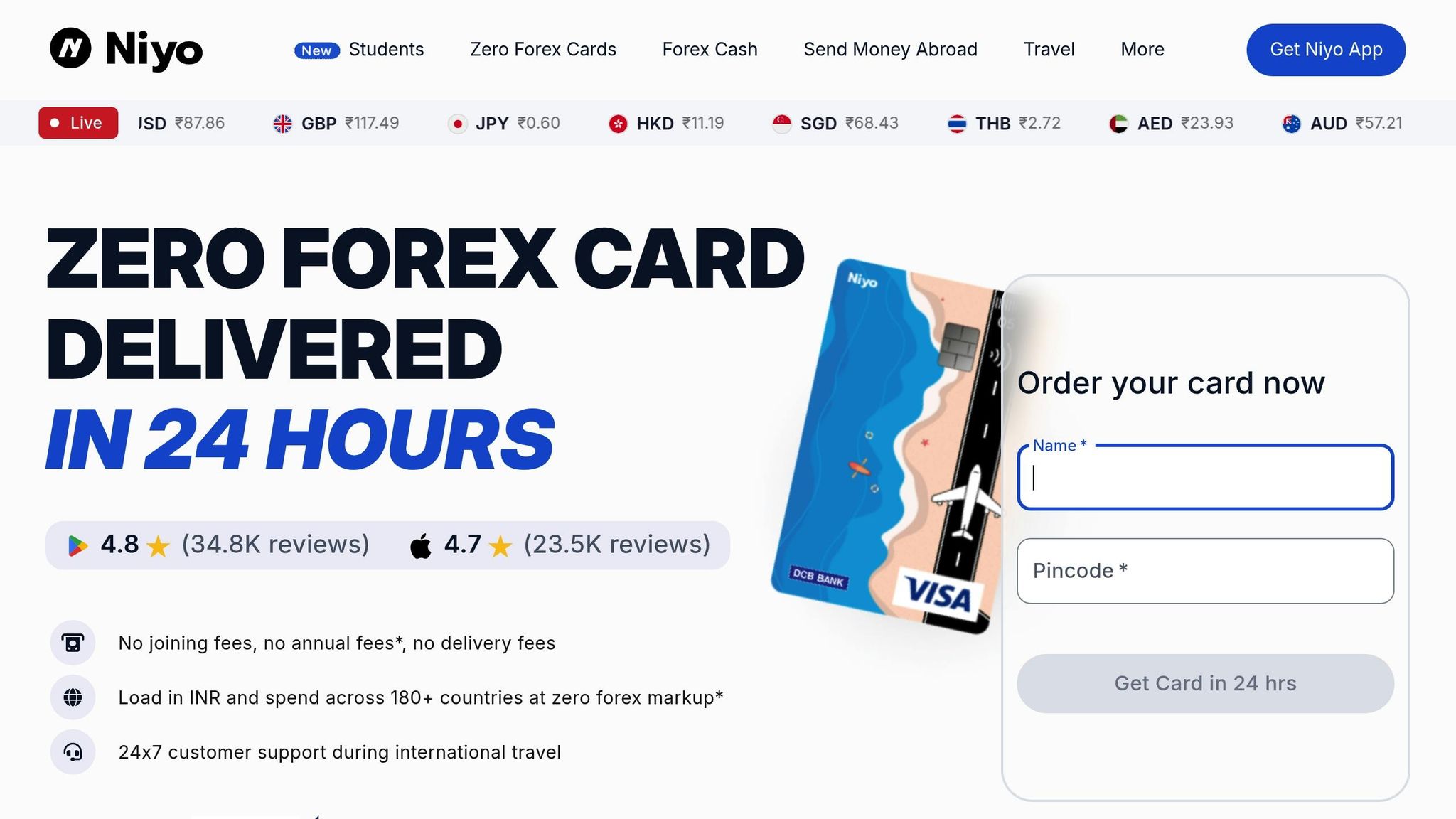
Managing your travel finances doesn’t have to be a headache. Niyo simplifies the process by removing forex fees and streamlining international transactions. With zero forex markup on currency conversions and intuitive digital tools, Niyo redefines how you handle money while travelling abroad. Here’s how Niyo’s features help you save and spend smarter.
Zero forex markup for global transactions
Niyo’s international debit and credit cards ensure you never pay forex markup fees. Unlike traditional banks that often tack on extra charges, Niyo processes your transactions at the VISA exchange rate - no hidden costs. Whether you’re spending $100 in New York or €50 in Paris, your payment reflects the actual VISA exchange rate in rupees at that moment.
Accepted in over 180 countries to transact in over 130 currencies, these cards offer global coverage. By cutting out unnecessary fees, Niyo makes sure every rupee you spend goes towards enriching your travel experience. The savings can be used for things that truly matter - like exploring new destinations or indulging in local cuisines.
Real-time spending management
Niyo keeps you in control of your travel budget with instant transaction notifications. Every international transaction immediately shows the exact amount debited in rupees, along with a detailed conversion history.
“My Singapore, USA, and Uzbekistan trips were so easy thanks to Niyo! Real-time spending alerts and seamless payments made it a must-have travel essential.” - Sourabh Shah, 20 March 2025
Need to secure your card? Niyo allows you to temporarily lock/unlock or permanently block it instantly with just a tap, providing peace of mind wherever you are.
“Niyo made every trip easier - from Singapore MRT rides to visa bookings. Zero markup and instant notifications gave me full control of my expenses.” - Prachi Jain, 04 March 2025
Additional travel benefits
Beyond saving on forex fees, Niyo offers features that enhance your entire travel experience. It’s not just a forex solution - it’s like having a travel assistant in your pocket. The platform includes an ATM Locator to help you find surcharge-free machines around the world, a Currency Convertor tool to check live forex rates, and it even offers international eSIMs to keep you connected seamlessly.
Other perks include online visa application services with a 99.4% approval rate for tourist visas across 50+ countries, exclusive discounts on hotel bookings and the ability to pay for up to 75% of your expenses using Niyo Coins earned through various transactions.
Other services offered by Niyo include flight bookings, foreign currency doorstep delivery, remittance, travel insurance, tours & attractions, and more.
Quick and easy setup with Niyo Express
Getting started with Niyo is straightforward. The Niyo Express service brings the onboarding process to your doorstep - whether at your home, office, or any other location of your choice. This ensures you receive your zero forex markup card well ahead of your travel dates. A Niyo Expert visits your location to help complete your biometric KYC and hand over your card right there. They even help with account set-up and getting your card ready for travel. Niyo’s seamless setup and support make managing travel finances stress-free, so you can focus on enjoying your journey.
Cost comparison: Regular forex fees vs. Niyo’s zero forex markup
When you use traditional banks for international purchases, you often face a double whammy of fees. These include a currency conversion fee - typically around 1% charged by network providers (VISA, MasterCard, etc.) - and an additional fee from your card issuing bank. Over time, these charges can quietly eat into your travel budget, making every transaction a little more expensive.
ATM withdrawals abroad aren’t any better. They usually come with both fixed fees and percentage-based charges, further increasing your expenses. Now, compare this to Niyo’s zero forex markup cards. With Niyo, you can make international transactions without worrying about hidden currency conversion fees. While some ATMs abroad might still levy minimal charges, you won’t face the extra markup that traditional cards sneak into your transactions.
Even better, Niyo processes transactions at the actual VISA exchange rate, ensuring you get a fair and transparent currency conversion. This holds true even if a merchant tries to use Dynamic Currency Conversion, which often results in inflated rates.
Conclusion: Save more and travel smarter with Niyo
Those seemingly minor forex fees can quietly pile up, draining thousands of rupees from your budget and turning an otherwise perfect trip into a costly affair.
The good news? You don’t have to let these hidden charges weigh you down. Zero forex markup cards, like those offered by Niyo, eliminate the unnecessary currency conversion fees that traditional banks often impose. Plus, tools for real-time spending management ensure you stay within your budget, avoiding any unpleasant surprises along the way.
Seasoned travellers know that having the right financial tools can make all the difference. By skipping dynamic currency conversion, keeping an eye on exchange rates, and using Niyo’s digital banking solutions, you can hold on to more of your money - money that’s better spent on the experiences that matter most. Niyo’s solutions not only help you avoid extra charges but also simplify your travel finances, making your journey smoother.
With Niyo, every transaction reflects the true interbank rate across 180+ countries, ensuring transparency and predictability in your expenses.
So, let your travel budget go toward the memories you’ll cherish, not the fees you’d rather forget. Smart financial decisions mean you can explore the world without hidden costs, leaving you with more to spend on the adventures that truly make your trip unforgettable.
Download Niyo App
Frequently Asked Questions
To avoid paying extra Dynamic Currency Conversion (DCC) fees, always choose to pay in the local currency when you’re abroad. Whether you’re swiping your card at a store or withdrawing cash from an ATM, say no to any offer that converts the amount into Indian Rupees (₹) right away. Paying in the local currency means your card provider’s exchange rate will apply, which is usually more transparent and cost-effective.
This small but crucial decision can help you sidestep unnecessary charges and make your travel budget last longer.
Zero forex markup cards are a game-changer for anyone dealing with international transactions. They eliminate the extra foreign exchange fees that traditional credit or debit cards usually charge. Instead, these cards process payments at the standard network exchange rate, ensuring you don’t pay more than necessary.
These cards are especially handy for frequent travellers, students studying overseas, or anyone who regularly makes payments in foreign currencies. By cutting out additional fees, they help you manage expenses better and reduce the impact of fluctuating currency rates. This means you can stick to your travel budget more easily without worrying about unexpected costs. Choosing a zero forex markup card can simplify your international spending and make your trips far more economical.
When planning international travel, it’s important to consider how Tax Collected at Source (TCS) might affect your budget, especially if your foreign expenses or remittances exceed ₹10 lakh in a financial year. A 20% TCS rate applies to many international transactions above this limit, which can add a noticeable extra cost to your travel plans.
To manage this, it helps to plan your spending carefully. Try to keep expenses below the ₹10 lakh threshold whenever possible. If that’s not feasible, spreading payments over time may help ease the financial burden. Better yet, get the Niyo Credit Card with zero forex markup. Currently, TCS doesn’t apply to transactions made with a credit card.
Also, don’t forget to check your Form 26AS for a record of your TCS payments. You can claim credit for these when filing your Income Tax Returns (ITR), which could help offset the added expense later. With a bit of preparation, you can make your international travel more budget-friendly.
To avoid paying extra Dynamic Currency Conversion (DCC) fees, always choose to pay in the local currency when you’re abroad. Whether you’re swiping your card at a store or withdrawing cash from an ATM, say no to any offer that converts the amount into Indian Rupees (₹) right away. Paying in the local currency means your card provider’s exchange rate will apply, which is usually more transparent and cost-effective.
This small but crucial decision can help you sidestep unnecessary charges and make your travel budget last longer.
Zero forex markup cards are a game-changer for anyone dealing with international transactions. They eliminate the extra foreign exchange fees that traditional credit or debit cards usually charge. Instead, these cards process payments at the standard network exchange rate, ensuring you don’t pay more than necessary.
These cards are especially handy for frequent travellers, students studying overseas, or anyone who regularly makes payments in foreign currencies. By cutting out additional fees, they help you manage expenses better and reduce the impact of fluctuating currency rates. This means you can stick to your travel budget more easily without worrying about unexpected costs. Choosing a zero forex markup card can simplify your international spending and make your trips far more economical.
When planning international travel, it’s important to consider how Tax Collected at Source (TCS) might affect your budget, especially if your foreign expenses or remittances exceed ₹10 lakh in a financial year. A 20% TCS rate applies to many international transactions above this limit, which can add a noticeable extra cost to your travel plans.
To manage this, it helps to plan your spending carefully. Try to keep expenses below the ₹10 lakh threshold whenever possible. If that’s not feasible, spreading payments over time may help ease the financial burden. Better yet, get the Niyo Credit Card with zero forex markup. Currently, TCS doesn’t apply to transactions made with a credit card.
Also, don’t forget to check your Form 26AS for a record of your TCS payments. You can claim credit for these when filing your Income Tax Returns (ITR), which could help offset the added expense later. With a bit of preparation, you can make your international travel more budget-friendly.